You're on your way to Sunday dinner at your parents' place in Scarborough when your phone buzzes. It's your mom: "Dad slipped getting out of the shower. He says he's fine, but…"
Your stomach drops. You've been quietly worrying about this for months — and now it's real.
If this sounds familiar, you're not alone. Falls are the leading cause of injury among older Canadians, and most happen right at home. But here's the good news:the vast majority of falls are preventable.With some practical changes many of which you can do this weekend ,you can make your loved one's home dramatically safer.
This guide walks you through the house room by room, with actionable tips and Toronto-specific resources to help you get started.
This article provides general information about fall prevention and home safety. It is not medical advice. Please consult your healthcare provider for guidance specific to your or your loved one's health needs.
Why Fall Prevention Matters
Falls aren't just minor inconveniences. In Canada,about 1 in 3 seniors aged 65 and older falls at least once every year. For those aged 80 and older, the risk is even higher.
The consequences can be serious. Falls are the leading cause of injury-related hospitalizations among Canadian seniors and account forover 95% of hip fractures. The healthcare costs are staggering, and with Canada's aging population, these numbers will keep climbing.
But statistics don't have to be destiny. Simple home modifications, better awareness, and the right support can make a real difference. At Haven at Home, we help Toronto families withprofessional fall prevention assessmentsthat identify risks before they become emergencies.
Understanding Your Fall Risk Factors
Before you start rearranging furniture, it helps to understand why falls happen.
Risk factors generally fall into two categories:environmentalandphysical.
Environmental hazardsare things in the home itself clutter, poor lighting, loose rugs, and a lack of supports like grab bars all increase risk. These are usually the easiest to fix.
Physical factorsare a bit more complex. Key risk factors include:
- A history of previous falls
- Reduced muscle strength and balance problems
- Vision changes
- Taking multiple medications (four or more)
- Feeling lightheaded when standing up
- Depression and cognitive changes
Age-related muscle loss and changes in how we walk also play a significant role in fall risk as we get older.
If your parent or loved one is living with conditions like Parkinson's disease, diabetes, or recovering from a stroke, their risk may be higher. We'd always encourage a conversation with their family doctor and consider howin-home physiotherapyor anoccupational therapistassessment could help identify specific vulnerabilities.
Bathroom Safety: Your Number One Priority
If you only tackle one room this weekend, make it the bathroom. Bathrooms are among the most dangerous rooms in the home for falls, thanks to wet surfaces, hard flooring, and the awkward movements required to get in and out of the tub or shower.
Here's your bathroom safety checklist:
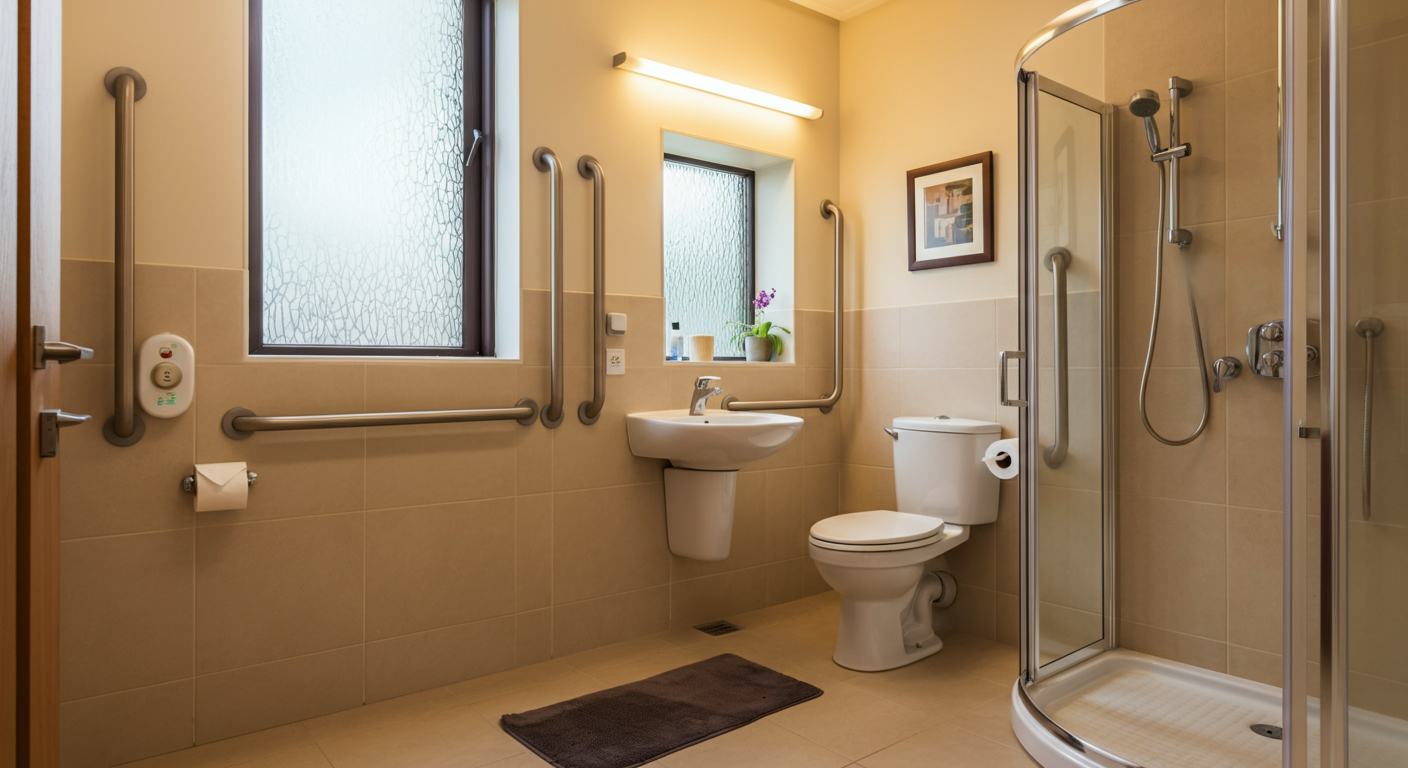
- Install grab barsnear the toilet and on both the inside and outside of the tub or shower. Wall-mounted grab bars anchored into wall studs provide the most stable support and no, a towel rack is not a substitute.
- Add non-slip mats or adhesive stripsto the floor of the tub or shower. Also place a non-slip bath mat on the floor outside the tub for wet feet.
- Consider a shower seat or transfer benchthis is especially important for anyone with balance challenges or who tires easily while standing.
- Look into a raised toilet seatif getting up and down is difficult. Models with built-in armrests offer extra stability.
- Upgrade your lighting:Make sure the bathroom is bright and easy to see in. Add a plug-in night light or motion-sensor light for nighttime trips.
- Remove any loose bath matsthat can bunch or slide. Replace them with non-slip alternatives.
These modifications are affordable, widely available at Toronto hardware stores, and most can be installed in an afternoon.
Once the bathroom is sorted, the kitchen deserves your attention next — it’s another high-traffic area where independence and risk intersect daily.
Kitchen Modifications for Safer Meal Prep
The kitchen is where independence meets real risk reaching for high shelves, bending into low cupboards, and navigating spills on hard floors. A few smart changes can keep meal prep safe.
Reorganize before you renovate :Move the items your loved one uses most often dishes, mugs, pots, spices to counter height or waist-level shelves. The goal is to eliminate reaching overhead or bending low, both of which shift balance and increase fall risk.
More kitchen safety tips:
- Place non-slip matsin front of the sink and stove where standing is prolonged and spills are likely.
- Clean up spills right away,keep a mop or absorbent cloth within easy reach so this feels like a quick habit, not a chore.
- Improve task lightingover counters and the stove. Under-cabinet LED lights are inexpensive and make a big difference.
- Get a reaching tool(a long-handled grabber) for anything stored above shoulder height. They cost under $20 and save risky stretching.
- If a step stool is necessary,make sure it's sturdy with a handrail and non-slip feet. But honestly? It's better to reorganize so a step stool isn't needed at all.
- Keep walkers and mobility aids accessiblenot tucked in a closet across the room. If your loved one needs it to move safely, it should always be within arm's reach.
With the kitchen and bathroom addressed, it’s time to look at where your loved one spends most of their waking hours — the living room and bedroom.
Living Spaces: Clear Pathways and Smart Furniture
Living rooms and bedrooms are where many seniors spend the most time and where tripping hazards love to hide in plain sight.
- Start with the floor:Remove throw rugs entirely, or at minimum secure them with non-slip backing or double-sided carpet tape. Loose rugs are one of the most common and most easily fixable fall hazards in the home. While you're at it, secure any loose carpet edges and repair uneven flooring.
- Create clear walking paths:Rearrange furniture so there's a wide, unobstructed route through every room. Tuck electrical cords along walls or under cord covers never across a walking path.
- Think about lighting:Every room should be well-lit, and motion-sensor lights in hallways and along the path to the bathroom are one of the best investments you can make for nighttime safety. A simple plug-in night light in the bedroom can prevent those disorienting middle-of-the-night trips.
A couple more tips:
- Remove low coffee tables or ottomans that are hard to see, especially in dim light.
- Choose chairs and sofas with firm cushions and armrests that make it easier to sit down and stand up.
- Keep a cordless phone or cell phone within reach so your loved one doesn't rush to answer a call.
Beyond the main living areas, stairs and entryways deserve special attention — particularly in Toronto’s older housing stock, where multi-level homes are the norm.
Stairs and Entryways: Critical Safety Zones
For many older Toronto homes think those classic two-storey houses in the Annex, Leslieville, or Etobicoke stairs are a daily reality. They're also one of the highest-risk areas for a serious fall.
Handrails are non-negotiable:Install sturdy handrails on both sides of every staircase, and make sure they extend slightly beyond the top and bottom steps. They should be firmly mounted and easy to grip.
More stair and entryway tips:
- Add non-slip treads or contrasting tapeon each step edge. This helps with both traction and visibility especially important for anyone with reduced depth perception.
- Install light switches at both the top and bottomof staircases, and keep the area brightly lit.
- Keep stairs completely clearof shoes, bags, laundry baskets, and anything else. Every item on a step is a tripping hazard.
- For Toronto's winters,set up an entry mat system a coarse outdoor mat to scrape boots and an absorbent indoor mat to catch snow and moisture. Wet entryway floors are a major slip risk from November through March.
- Consider a rampfor anyone with significant mobility challenges, especially if there are steps at the front or back entrance.
- Make sure exterior lighting is brightfor evening returns sensor-activated lights at the front door are ideal.
If stairs are becoming genuinely unsafe, it may be time to consider whether main-floor living is possible or whether a stair lift makes sense. Anoccupational therapistcan help assess the situation and recommend the right solution.
Beyond the physical changes you can make at home, Toronto offers a strong network of fall prevention programs and services worth knowing about.
Toronto-Specific Fall Prevention Resources
One of the advantages of living in Toronto and the GTA is access to excellent fall prevention programs and services. Here are the ones worth knowing about:
- City of Toronto — Step Ahead to Fall Prevention:A free e-learning program that teaches practical skills to reduce fall risk. Available attoronto.ca, or call3-1-1for more information.
- Sunnybrook Falls Prevention Program:Offers consultation with a geriatrician, physiotherapist, and occupational therapist for seniors over 65 who are experiencing falls or are at high risk. Requires a physician referral. Located atSunnybrook Health Sciences Centre.
- Toronto Rehab Falls Prevention Program (UHN):Patients are assessed by a team of health professionals to identify the causes of their falls. Alsorequires a referral.
- Health811:Call to speak with a registered nurse who can connect you with local exercise and falls prevention classes in your community across Ontario.
- Ontario Seniors' INFO line:Call1-888-910-1999(TTY: 1-800-387-5559) for information about provincial programs and services for seniors.
- Ontario Health at Home:Provides home care assessments and coordination. Anyone can make a referral you, your parent, or a healthcare provider. A valid OHIP card is required. Visitontariohealthathome.ca.
- 211 Ontario:Call2-1-1or visit211ontario.cato connect with community services, support programs, and local seniors' resources.
These community programs are a great starting point — but sometimes the situation calls for more personalized, hands-on professional support.
When to Consider Professional Fall Prevention Support
DIY modifications can go a long way, but sometimes you need an expert eye or an extra pair of hands. Here are some signs it might be time to bring in professional support:
- After a fall or near-fall:Even if nothing was broken, a fall is a clear signal that something needs to change.
- If balance or mobility is noticeably declining:Difficulty getting up from a chair, unsteadiness on stairs, or grabbing walls for support are all red flags.
- After a hospital stay:If your loved one istransitioning home from hospitalespecially after a hip fracture, surgery, or stroke the risk of falling in the first few weeks is particularly high.
- If you're worried when you're not there:That nagging feeling when you leave your parent's house? It's worth listening to.
How Professional Care Can Help
Personal Support Workers(PSWs)provide hands-on help with daily activities like bathing, dressing, and moving safely around the home. They're trained to assist with mobility and monitor well-being, reducing fall risk during the activities where falls most often happen.
In-home physiotherapyfocuses on the physical side of fall prevention. A physiotherapist will assess strength, flexibility, balance, and gait then create an exercise program designed to improve stability and confidence.
Anoccupational therapisttakes a different but complementary approach. They evaluate the home environment to identify hazards, recommend tailored modifications, and help your loved one learn safer ways to perform everyday tasks.
For families supporting a loved one withstroke recovery,dementia careneeds, or those who simply need reliablecompanion careto reduce isolation and keep an eye on safety, professional support can provide peace of mind for everyone. If your loved one needs help withmedication management, that can also reduce fall risk since certain medications and combinations can cause dizziness or unsteadiness.
How to Access Professional Support in Toronto
Getting started with professional home care in Toronto is more straightforward than many families expect. For publicly funded services, your first step is contacting Ontario Health at Home (formerly CCAC) — you can self-refer by calling 310-2222 (no area code needed) or visiting ontariohealthathome.ca. A care coordinator will conduct a free needs assessment, usually within a few days, and connect you with eligible services including nursing, physiotherapy, and personal support.
For private home care — which offers more flexibility in scheduling, caregiver continuity, and the range of services available — you can contact a provider like Haven at Home directly. There's no referral required and no waitlist. A care manager will discuss your loved one's specific needs, conduct a home assessment if helpful, and build a care plan around their routine and goals.
Whether you go the public or private route, expect an initial conversation about your loved one's health history, current challenges, living situation, and what matters most to them. The goal is always to match the right support to the right person — not a one-size-fits-all approach.
Taking the First Step
Fall prevention doesn't have to be overwhelming. Start with one room the bathroom is a great choice and work your way through the house over a few weekends.
Ask your loved one what feels unsteady or unsafe to them. Involve them in the process. After all, it's their home, and these changes are about helping them stay in it safely and comfortably for as long as possible.
If you'd like some guidance on where to start or if a recent fall has you looking for support we're here. Haven at Home offersprofessional fall prevention assessmentsthroughout Toronto and the GTA. No pressure, no obligation. Just a friendly conversation about what might help.
Give us a call orreach out onlineto learn more. We'd love to help your family feel safer at home.
Related Reading
- Falls Prevention for Seniors: Everything Toronto Families Need to Know— the complete guide to why seniors fall and what to do about it
- 10 Best Balance Exercises for Seniors You Can Do at Home— strength and balance training to complement home modifications
- Home Safety Checklist for Seniors: Printable Room-by-Room Guide— a quick-reference checklist version of this guide
Want a professional home safety assessment?Our physiotherapists evaluate your home environment as part of every in-home visit. Call416-795-0373to book.